
Equity Case Study:
Washington, DC
How Building Bridges Across the River in Washington, DC Integrated Equitable Development with the 11th Street Bridge Park
| Region | Eastern USA | Principle | Build Wealth |
| City | Washington, DC | Best Practice | Create an anti-displacement plan and standards |
| Population | 672,000 | ||
| Partners | Local Initiatives Support Corporation (LISC) | ||
“The 11th Street Bridge Park says I see you, I see the value in what you do, and let’s do this together. And I think that’s completely different.”
–Anika Hobbs, Ward 8 small business owner
Project Description
When Building Bridges Across the River began envisioning the 11th Street Bridge Park in 2011, Washington, DC was one of the fastest gentrifying cities in the country. The design for DC’s first elevated park includes an Equitable Development Plan created in collaboration with the disproportionately underinvested communities surrounding it. Key partners include LISC, which has provided significant financial and staffing support.
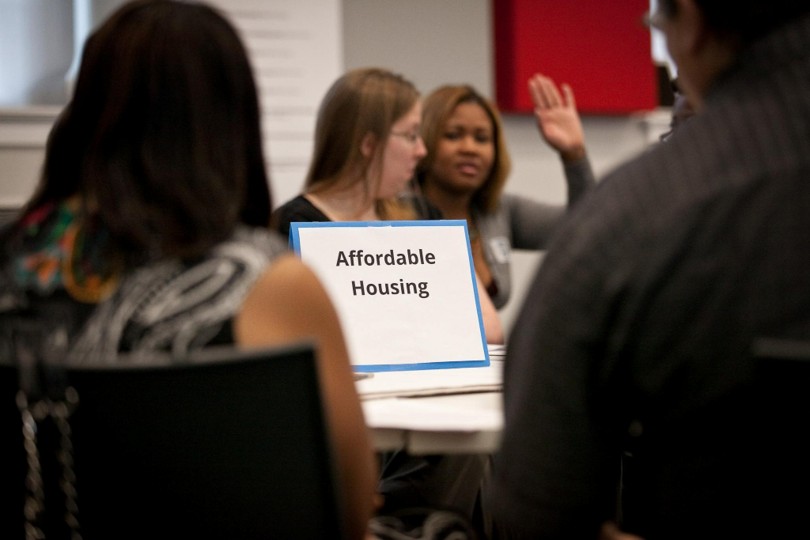
A meeting held by the Bridge Park’s Equitable Development Task Force to receive community feedback on proposals for affordable housing.
Best Practices in Action
Recognizing that the installation of this new bridge park could have an impact by raising property values and driving out the largely low-income and Black neighborhoods in the area, Building Bridges has hosted over 1,000 meetings to engage local residents on their priorities and develop comprehensive anti-displacement strategies. The Equitable Development Plan, now in its third iteration, focuses not only on housing but also workforce development, small businesses, health and wellness, and arts and culture. A Community Land Trust (CLT) was established to purchase land and allow individuals to purchase and own buildings on that land. Dividing these costs can make homes more affordable. In addition, the Trust requires that two-thirds of its board are local residents, thereby ensuring that decision-making power stays in the community. Early and visible wins, such as 153 renters becoming homeowners through financial literacy and down payment assistance programs, have built trust and momentum among the community. The plan builds on the work of existing nonprofits and takes a multi-sector approach to maximize impact and funding.