
Sustainability Case Study:
GSI Impact Calculator
How Two Cities Measured Sustainability and Climate Resilience Co-Benefits with the GSI Impact Calculator
| Region |
Great Plaines (NE) Southwest (AZ) |
Principle | Align with established sustainability and climate resilience goals |
| City |
Omaha, NE Tucson, AZ |
Best Practice | Identify the community co-benefits of GSI |
| Population |
488,000 (Omaha) 548,000 (Tucson) |
||
| Partners |
Green Infrastructure Leadership Exchange The Nature Conservancy One Water Econ Radbridge |
“The overall goal is to make the case for GSI to the other departments.”
–Irene Ogata, Urban Landscape Manager
Project Description
The GSI Impact Calculator is a central feature of the GSI Impact Hub. By weighing initial installation and upkeep costs against 44 distinct benefit categories, the tool delivers a comprehensive cost-benefit analysis for green stormwater infrastructure. Users can explore default scenarios for quick comparisons or input custom data to evaluate specific project proposals. In addition, the Hub features detailed guides exploring GSI’s wider co-benefits.
Two cities with contrasting climates and stormwater systems used the GSI Impact Calculator to evaluate and showcase their project outcomes (watch their video walkthroughs here):
- Omaha, Nebraska: In the Florence neighborhood, replacing impervious surfaces with street trees and seven bioretention basins reduced stormwater flow into the combined sewer system. This approach allowed the city to avoid costly infrastructure upgrades, operational demands, and water treatment expenses, while adding valuable shade and lifting local property values.
- Tucson, Arizona: In the Dunbar neighborhood, three parkway rain gardens were added along a separated stormwater network. The Calculator projected a return on investment exceeding 400%, driven by property value gains, heat mitigation, and avoided infrastructure costs.
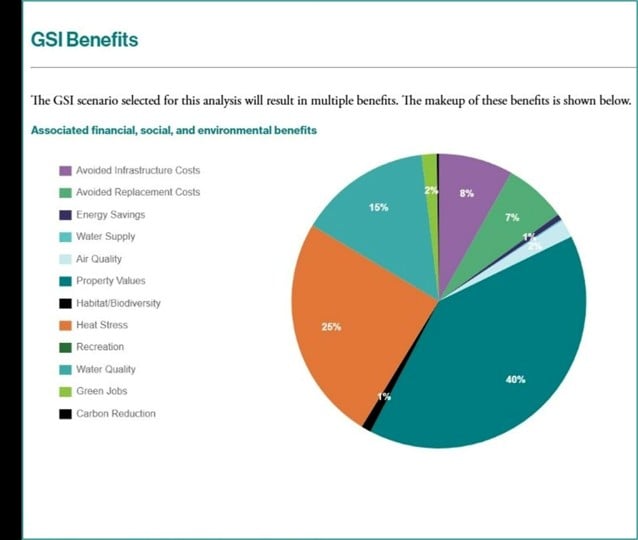
The GSI Impact Calculator calculates several co-benefits for green infrastructure projects.
Best Practices in Action
Omaha’s decision-making process traditionally prioritizes direct financial returns. The Calculator report for the Florence Streetscape helped highlight the broader, indirect values of GSI while demonstrating clear savings on avoided capital expenses. In Tucson, where GSI funding was largely restricted to water utility budgets, the Calculator results provided compelling evidence to secure additional backing from the city’s Million Trees heat-resilience initiative.
Key Learnings
Streamline early decision-making
Pre-loaded default data allows teams to quickly generate cost-benefit estimates, building a strong case for project funding right from the start.
Use visual storytelling
Clear, accessible visual data helps diverse stakeholders and funding entities quickly grasp the multi-faceted value of GSI investment.
Align with partner goals
Tailor messaging to demonstrate how green infrastructure helps other municipal departments achieve their specific operational and community objectives.
Other Recommendations
- Mainstream GSI programs within established sustainability and climate resilience policies and programs.