
Buy-in Case Study:
City of Portland, OR
How City of Portland, OR Empowered Communities with the Clean Energy Fund and a Multifaceted Approach to Green Initiatives
| Region | Pacific Northwest | Principle | Envision |
| City | Portland, OR | Best Practice | Co-create a strategic vision that integrates audience interests |
| Population | 635,000 |
“Leaders met for years before getting anywhere close to developing a public campaign. We had to build trust across green groups and frontline groups. Once that trust was built, we were then able to leap forward with a very aggressive timeline and take very big risks together.”
–Lauren Stevens, PCEF Field Volunteer Organizer
Project Description
The Portland Clean Energy Community Benefits Fund (PCEF) was established to address climate change — with a social justice lens — ensuring Portland’s most vulnerable communities are primary beneficiaries. This fund was created through a 2018 ballot measure and is financed by a 1% surcharge on the annual gross revenue of businesses netting $1 billion. The fund is dedicated to supporting renewable energy, energy efficiency, green infrastructure, job training and regenerative agriculture projects. Since its inception in 2018, the PCEF has granted more than $875 million in clean energy funds. The fund places a priority on low-income and communities of color, ensuring that everyone has fair access to climate solutions.
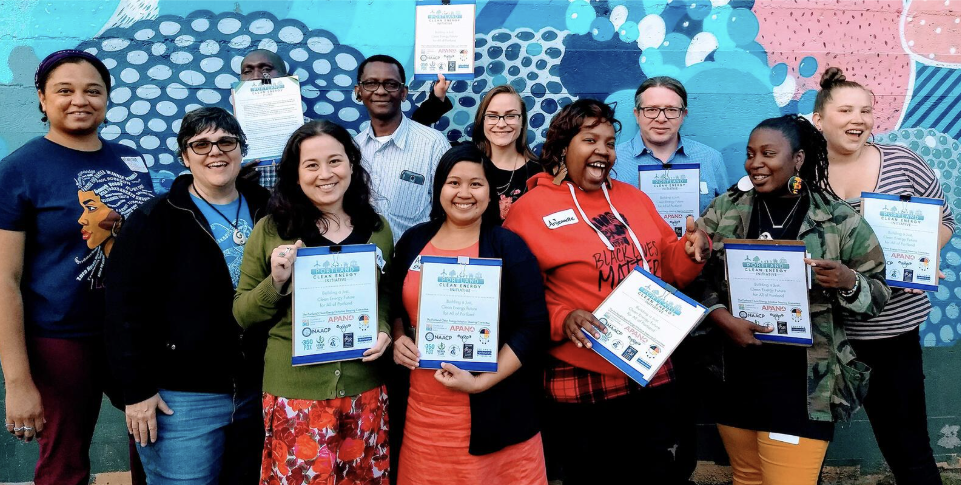
The Portland Clean Energy Benefits Fund focuses investments in climate action by giving priority to people that have been historically under-resourced by sustainability, climate action, and clean energy programs.
Best Practices in Action
Portland spent years establishing deep ties and building trust among organizations representing members of racially and ethnically diverse communities. To ensure a broad community reach, the PCEF strategically reached out to neighborhoods that typically have low voter turnout. They brought in language-specific canvassers to ensure accessibility. The leadership team was composed of people from the communities disproportionately affected by climate change. The team focused on solutions tailored to mitigate disasters in the neighborhoods where these voters live and work. As a result, the PCEF made over 60,000 contacts during their initial outreach. The implementation of projects has created over 10,000 hours of labor for the local workforce.
Key Learnings
Build trust
Organizers recognized that it would take time and patience to build trust with historically marginalized communities. Organizers had to overcome the community’s reticence to work with primarily white-led organizations that have historically held positions of power.
Internal communication is key
The PCEF learned that building bridges internally is key. Everyone working together has to feel empowered to share their voice and expertise.
Meet the community where they are
The PCEF took extra care to communicate with members of ethnically diverse communities in their language to ensure they were listened to and understood.
Other Recommendations
- Build diverse coalitions that help you broaden your reach.