
Design & Build Case Study:
Pittsburgh, PA
How Pittsburgh Water and Sewer Authority and the City of Pittsburgh, Pennsylvania Built Climate-Resilient Stormwater Standards by Tailoring Codes to Local Conditions
| Region | Northeast | Principle | Establish Design Standards |
| City | Pittsburgh, PA | Best Practice | Adapt to local conditions |
| Population | 300,000 | ||
| Partners | Pittsburgh Water, AKRF, E.Holdings | ||
“You can integrate climate change into your policy making, it doesn’t have to be scary.”
–Kyla Prendergast, City of Pittsburgh Senior Environmental Planner
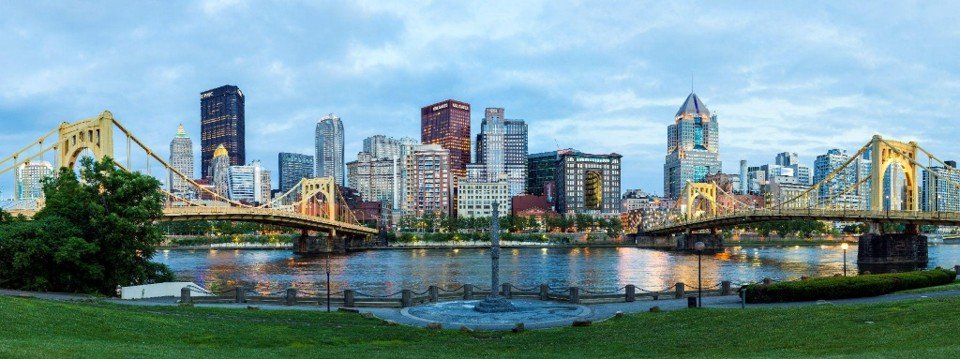
Pittsburgh skyline and river trail
Project Description
In 2019, the Pittsburgh Water and the City of Pittsburgh launched a joint effort to develop a modern stormwater code, driven by a federal consent decree. The goal was to create clear, resilient standards that would guide infrastructure planning for the next 50 to 100 years. With these standards, Pittsburgh Water and the City aimed to modernize infrastructure planning, integrate climate resilience, and align regulations with local conditions.
The effort brought together city departments, regulatory agencies, local engineers, and community groups through an advisory committee, public workshops, and interactive engagement platforms. By aligning this process with the creation of the city’s stormwater fee, it allowed for more strategic and efficient outreach. In April 2022, the new stormwater code was adopted. The code is paired with a flexible design manual that can be updated over time.
Best Practices in Action
Pittsburgh’s approach to establishing stormwater design standards demonstrates a deep attention to local conditions and stakeholder engagement. The city went beyond a one-size-fits-all model to match local conditions and requirements. While developing standards, the city addressed the area’s distinctive geography, regulatory landscape, and updated climate projections. The team recognized the need for current and detailed datasets and used local rainfall data from a Carnegie Mellon and RAND Corporation study rather than national datasets. This approach also allowed the team to embed climate resilience directly into policy.
To provide consistent and practical guidance for users, the code was aligned with existing city ordinances, state mandates, and land operations permitting processes. The team balanced these requirements with room for innovation. Inspired by examples from Chicago and Philadelphia, the team introduced specific standards for sub-watersheds.
Pittsburgh invested in a robust and thoughtful engagement process to hear from a variety of voices. Advisory committee members from city departments, regulatory agencies, and local engineering firms participated in monthly meetings, while the broader public was engaged through a series of five virtual workshops and multiple interactive online tools during the COVID-19 pandemic. Internally, the team established ongoing opportunities for regular collaboration through weekly coordination meetings and bi-weekly permitting team check-ins. Regular meetings allowed for real-time feedback and problem solving, including how to manage projects caught between old and new requirements.
Proactive planning was essential to putting the new standards into practice and building in opportunities for continuous improvement. The team built in feedback loops to refine standards over time and added critical staff capacity to support implementation. Together, these strategies ensured the standards were technically sound, informed by stakeholders, context-specific, and had broad support.
Key Learnings
Apply local data
Using region-specific climate and soil information made the standards more realistic and effective. Pittsburgh has a high percentage of clay in the soil, known as “red beds.” Red beds can create landslides and limit infiltration capacity. Factoring in these local conditions was critical to inform the design manual.
Plan for the transition
- A clear transition plan and added staffing helped support the process to move projects from old to new codes. The new stormwater codes created a new stormwater permit, which prompted a greater need for staff capacity. Planning ahead helped the team manage projects caught in the shift between standards.
Commit to ongoing coordination
Weekly and monthly meetings kept partners aligned and helped resolve challenges quickly. These regular touch points allowed the process to continue to move forward and the two major partners to maintain their commitment to this work.
Plan for climate change
With thoughtful framing, climate-forward policies can gain both political and community support. Most people are experiencing climate impacts in their everyday lives. When backed by a clear rationale, adaptations in response to climate change are more likely to gain champions.