
Equity Case Study:
Atlanta, GA
How Atlanta, GA Partnered to Anchor and Uplift Community with Rodney Cook, Sr.
| Region | Southern USA | Principle | Build Wealth |
| City | Atlanta, GA | Best Practice | Create an anti-displacement plan and standards |
| Population | 499,000 | ||
| Partners | City of Atlanta Department of Watershed Management; City of Atlanta Department of Parks & Recreation; Trust for Public Land; National Monuments Foundation; Park Pride; West Atlanta Watershed Alliance; Alliance for the Activation of Cook Park; Westside Future Fund | ||
“There’s a need for a park in the community, and it really took a village to get this thing done and across the finish line.”
–Jay Wozniak, Trust for Public Land, Georgia Director of Urban Parks
Project Description
In 2002, Atlanta’s historic Vine City neighborhood was struck by a catastrophic flood event that destroyed 60 homes and required major rescue efforts. The land sits at a low point of the city and had historically been associated with flooding and combined sewer overflows during larger storms. Following the major flood event, the community organized grassroots efforts to advocate for a new park and worked alongside the City of Atlanta and the Trust for Public Land to bring that vision to fruition.
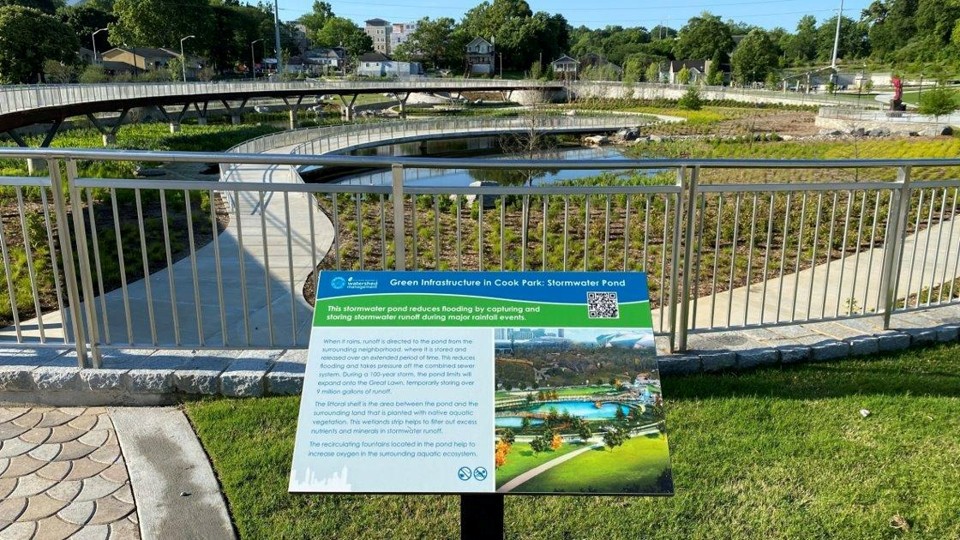
Cook Park features numerous green infrastructure elements – the entire park is designed to flood to hold up to a 100-year storm’s volume of runoff. (This was tested in a major storm event in September 2023.)
Best Practices in Action
The City purchased many of the homes and properties that were destroyed in the 2002 flood and relocated the residents. The community saw an opportunity to reimagine the space for gathering, recreation, respite and healing, and spearheaded the movement to re-develop the blighted area into a signature park. A 2010 community-led green infrastructure vision plan identified the site as a catalyst in a network of green spaces designed to capture and absorb stormwater, and multiple partners came together to implement it.
The City’s Department of Watershed Management invested $30 million to build a stormwater pond and wetland system and other green infrastructure practices that bring nature into the city and manage up to nine million gallons of stormwater in a major rain event. The Trust for Public Land, working with the City’s Department of Parks & Recreation, raised charitable funds to install recreational elements such as a playground and splash pad. Monuments to local civil rights heroes were also erected to honor the significant legacy of these Westside neighborhoods. A community group, the Alliance for the Activation of Cook Park, continues to steward the park, sponsor events and advocate for improvements.
A major focus was to avoid displacement of legacy residents and other impacts of “green gentrification” seen as a result of previous developments. The City’s economic development arm, working with various nonprofit organizations, such as Westside Future Fund, developed anti-displacement tools, such as property tax relief and rental and home ownership support programs. The City and its partners have launched affordable housing initiatives on the Westside to retain and attract a diverse population. Atlanta recently passed anti-blight legislation to encourage property owners to contribute to neighborhood development and fair housing.