
Equity Case Study:
Pittsburgh, PA
How Pittsburgh, PA Mapped Environmental Equity to Understand Vulnerability in the Nine Mile Run Watershed
| Region | Mid Atlantic, USA | Principle | Deliver Benefits |
| City | Pittsburgh, PA | Best Practice | Site green infrastructure with an equity lens |
| Population | 303,000 | ||
| Partners | CivicMapper, with funding from the Richard King Mellon Foundation and The Heinz Endowments | ||
“Stormwater projects have multiple benefits, not just removing sewage and preventing flooding. For example, trees can make it cooler for elderly residents in the summer, increase home values and clean the air for kids who have asthma. Without these equity studies, projects could be built where people complain the loudest rather than where there is the most need.”
–John Stephen, Negley Run Task Force Chair
Project Description
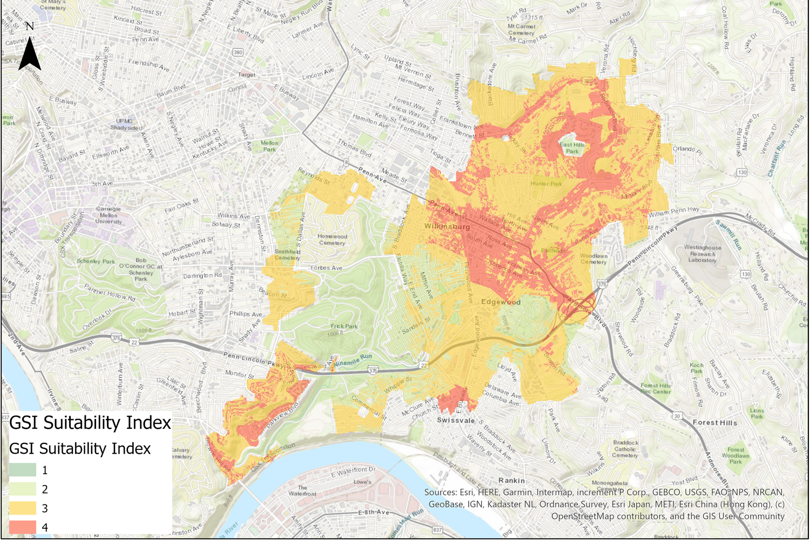
Upstream Pittsburgh, a watershed-focused nonprofit in the Pittsburgh area, developed the Nine Mile Run Equity Study as a tool to identify the most vulnerable areas in their watershed where environmental injustices and social inequities are occurring. While previous green infrastructure suitability studies focused on the network of sewers and pipes, they realized projects would be more successful if they were centered around community hubs and areas that people were already using. They partnered with CivicMapper, a local GIS firm that helped develop the hydrology tools to identify potential projects based on an overall equity score.
Best Practices in Action
Part of the challenge in developing this tool was determining what equity indicators to use. Ultimately, they selected four categories of indicators:
- Urban landscape (e.g., bus stops, parks, schools and vacant parcels that could be redeveloped and used for green infrastructure)
- Environmental indicators (e.g., tree canopy to mitigate urban heat island effect, air pollution)
- Public health (e.g., asthma, anxiety, depression)
- The CDC/STSDR Social Vulnerability Index
The results of the study led to the Dornbush Street Green Stormwater Infrastructure project. This project is located in East Hills, a predominantly African-American neighborhood in the east end of the City of Pittsburgh with a population of approximately 3,100 residents. The site sits at the base of the second steepest street in the city and in an area plagued by street flooding and basement backups. Upstream Pittsburgh worked closely with the East Hills consensus group throughout the planning process to select the proposed plants and installation plans. The site includes rain gardens and subsurface storage that will manage approximately 1.75 million gallons of water. Community members have complimented the flowers and are glad the street no longer floods. Future plans include a neighborhood block party and an art installation.