
Sustainability Case Study:
Parma, OH
How West Creek Conservancy Is Growing Native Plants and Local Connections
| Region | Midwest | Principle | Design and build in harmony with nature |
| City | Parma, OH | Best Practice | Select vegetation and soil mixes for sustainability and climate resilience performance |
| Population | 79,000 | ||
| Partners |
City of Parma Cuyahoga Soil & Water Conservation District McDougald’s Pollination Station Northeast Ohio Regional Sewer District |
“We are highly prioritizing local ecotype… We are collecting seeds mostly from trees and plants within the region rather than a native plant [where] you got the seeds from Minnesota, let’s say.”
–Daniella Dejak, Stewardship and Outreach Coordinator,
speaking to Western Cuyahoga Audubon
Project Description
When the City of Parma acquired a 48-acre historic nursery and placed it under a conservation easement with West Creek Conservancy, it opened the door to a transformative community vision. Partnering to activate the dormant land, they launched Creekside Collaborative Partners—a vibrant hub uniting local organizations around shared goals of sustainability, conservation, and environmental education. Today, the site features a thriving native plant nursery, a community seed library, and a field kitchen hosting food education programs. It also serves as an active research field site where the local soil conservation district studies the vital role of fungi in restoring urban soil health.
To ensure maximum ecological resilience, the nursery propagates plants using seeds harvested directly from local ecotypes across the region. These native trees and plants directly supply local watershed restoration initiatives and green infrastructure projects, while also being made available for public sales. The seed library expands this impact by distributing free native seed packets through regional library and park systems; demand was so overwhelming that West Creek partnered with a local arboretum and secured grant funding to scale the program. Operative with just one full-time staff member, Creekside’s success relies heavily on the passion and dedication of community volunteers.
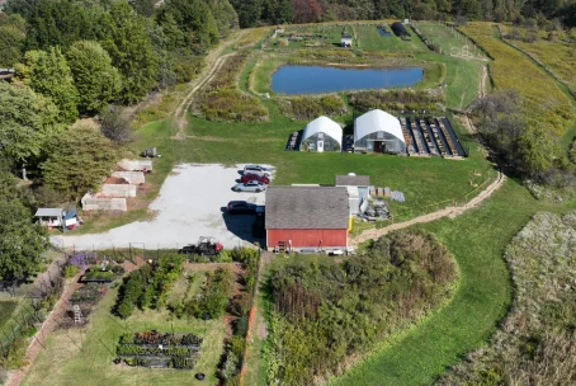
Creekside Collaborative Partners offers a nursery for native plants, research and educational opportunities, and community programs. Credit: West Creek Conservancy.
Best Practices in Action
By joining forces, the city, conservancy, and community partners successfully safeguarded a high-value green space from development while creating accessible outdoor programs that resonate with residents. Prioritizing locally harvested seeds strengthens native biodiversity, enhances the long-term survival of green infrastructure installations, and eliminates the carbon footprint associated with shipping plant materials from distant suppliers.
Key Learnings
Embed land conservation into GSI planning
Prioritizing land conservation laid the foundation for Creekside’s community-wide impact.
Source local ecotypes for long-term climate resilience
Using locally adapted seeds ensures green infrastructure vegetation thrives over time under changing climate conditions.
Unite multi-sector partners to build momentum
Co-locating scientific research, education, and community programs creates diverse opportunities for joint funding and shared co-benefits.
Other Recommendations
- Collaborate to advance shared sustainability and climate resilience goals.
- Protect and enhance existing high-quality natural areas and greenspace.
- Recognize trees and soil as valuable assets for mitigating and adapting to climate change.