A changing climate is resulting in record heat and rainfall that are wreaking havoc worldwide, with particularly dire impacts on disadvantaged communities. Excessive flooding and heat are threatening livability, negatively impacting human health and the environment, as indicated in the climate vulnerability index map shown below.
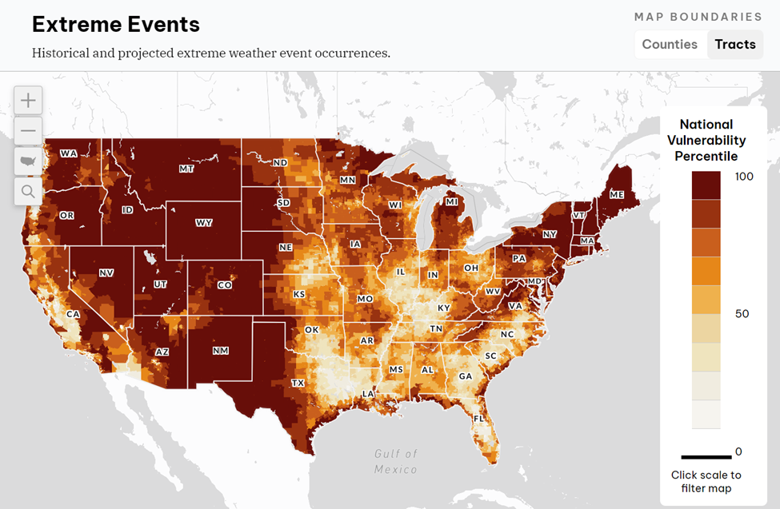
Figure 1. U.S. Climate Vulnerability Index (Available at: https://climatevulnerabilityindex.org/)
In the U.S. and Canada, local governments are charged with managing these challenges under various state, provincial and federal laws. With respect to flooding, few can afford to replace existing grey infrastructure so as to accommodate larger storms. They must get better at keeping more rain where it falls using green stormwater infrastructure (GSI). The challenge is that many local governments, particularly those that are typically small- to medium-sized and just getting started with GSI, need a leg up if their efforts are to be successful, a result revealed in the Water Environment Federation’s most recent MS4 Needs Assessment Survey, which listed green infrastructure as one of the greatest areas of need for informational/ technical resources – for the 4th year in a row!
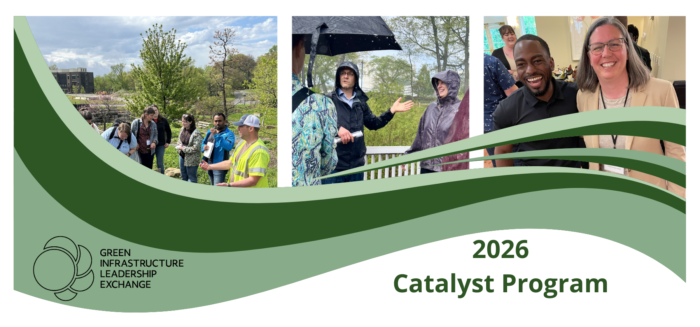
These challenges drove the Exchange to create the Catalyst Program, which seeks to help local governments seeks to help local governments in the early stages of developing a GSI program jumpstart their efforts. It involves:
- Travel by an experienced Exchange member-practitioner team to the jurisdiction to meet with staff and constituents to assess the local government’s GSI program against principles and best practices in the Framework of GSI Practice;
- Developing a menu of projects that will advance the local government’s GSI program; and
- A free-year of membership in the Exchange, whereby the local government will work virtually with the practitioner team in peer learning sessions on one or more of the projects.
To be eligible to participate, a local government must demonstrate that (1) the population served is disadvantaged, (2) there is political will for developing a GSI program, (3) it is committed to centering community in decision-making, (4) there are staff in place for GSI implementation and maintenance; & (5) there is funding dedicated to stormwater management and/or urban heat reduction.
Registration for this free program is open through December 11, 2026. You can learn more and apply on our website. In addition, if you have questions, please don’t hesitate to reach out to me at barbara@giexchange.org.